 Tes Rogers
Elizabeth & David Malan & the Neighbor’s Slave
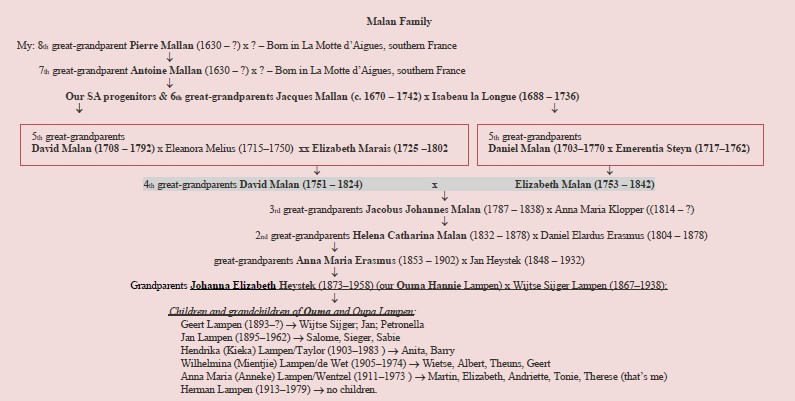
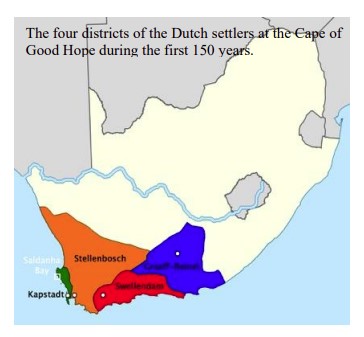
Let’s jump back into the 1750’s with our 4th great-grandparents David and Elizabeth Malan’s story. The Cape Colony was in its last few decades of V.O.C. (Vereenigde Oost-Indische Compagnie or Dutch East India Company) rule. A day or two’s horse ride (more by ox wagon) from the Kasteel de Goede Hoop at the foot of Table Mountain you would find the lush vineyards that our French Huguenot forefathers had been cultivating for about sixty-odd years. The magnificent Cape Dutch architecture was taking shape on these famous homesteads. The Drakenstein and Stellenbosch farming communities were well established now. In 1754 the Cape population stood at 5,510 Europeans and 6,729 slaves—most of whom worked on the Drakenstein/Stellenbosch farms. These farms also employed Khoi laborers. To ensure good trade relationships with the indigenous Khoi peoples, the V.O.C. did not allow them to be enslaved.
David Davidsz (the period title for “David’s zoon/son”) Malan was born in 1751 as the oldest son of David Malan “de Ouwde” (the elder) and his second wife, Elizabeth Marais, in the Drakenstein district of the Dutch Cape Colony (today’s Paarl area). The elder David was a son of Jacques Mallan, the progenitor of all our South African Malans. Another one of Jacques’s sons also fit into our family lineup: our 4th great-grandfather Daniel, who was five years older than his brother David (snr.) Two of the brothers’ children, David (Davidsz) Malan and Elizabeth Malan (born 1753), married one another in 1771. Oh, by the way, there are quite a few cousin-marriages in our bloodlines. At that time there were not an abundance of marriageable people in the Cape of Good Hope, and it was not uncommon for cousins to marry one another.
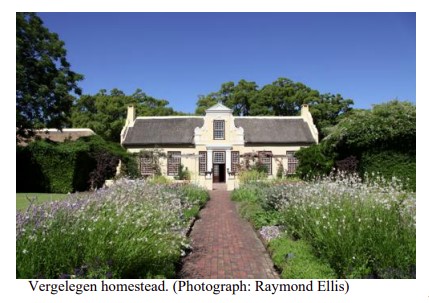
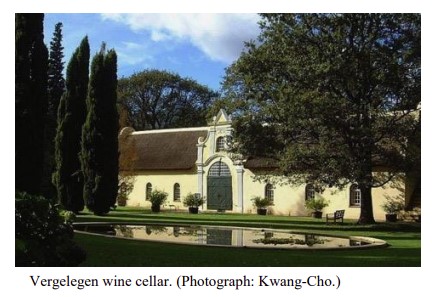
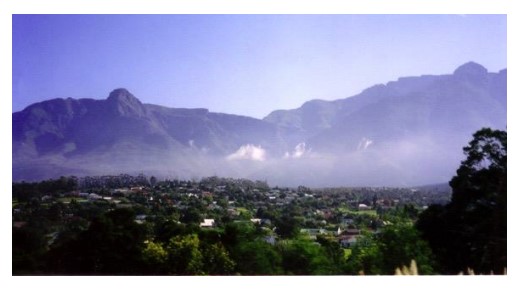
Back in 1708, when the very crooked Governor Willem Adriaan van der Stel was recalled by the V.O.C. to the Netherlands (and our families were involved in that story too…I will tell it later), his prize wine farm Vergelegen (meaning Situated Far Away) was subdivided into four smaller farms and sold off. The farm was laid out on the slopes of the Hottentot-Hollands mountains, overlooking False Bay with vineyards, fruit orchards and orange groves, oak and camphor trees that survive to today. The farm also consisted of a beautiful homestead, numerous outbuildings, a corn mill, reservoirs and irrigation canals—all originally built by van der Stel. One of the subdivided farms was De Laaste Gift (later renamed Lourensford) and owned by Daniel Malan between 1752–1770). Another subdivision, Cloetenburg, became the property of Daniel Malan in 1732. He transferred the title of the farm to his son Daniel Wynand in 1756, who built the nucleus of the current farm house. The gable was added later either by a grandson or Daniel Wynand’s son-in-law, Douw Gerbrandt Steyn (also in our family line.) Douw sold the majority of the farm to the developers of the town of Somerset-West in 1817.
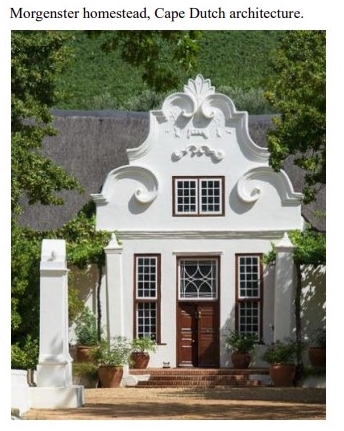
The two other subdivided farms also featured in our Malan family quite often: Jacques Mallan bought one of these farms at its first sale in 1708 and renamed it Morgenster (Morning Star). After he deeded the farm to his son Daniel, Jacques and his wife Isabeau continued to live on Morgenster until their death. The other farm’s name stayed Vergelegen, as this was where the original homestead was built. It would be owned by a few Malans through time. (See the Malanbond link in the resources.)
Two years after they got married in 1771, David Davidsz and Elizabeth first moved to a farm in the Swartland district. They owned six slaves at this stage, as well as 20 horses, 10 heads of cattle and 200 sheep, and sowed sufficient wheat for a very successful crop. (I have no idea when slavery became acceptable to these French Vaudois-descendants!) Young David was chosen as a deacon in the Swartland church. In 1780 the couple and their children moved again, this time to Vergelegen. The estate had been sold to David by the widow of one of his Malan cousins. Vergelegen was still, and now even more, the crème de la crème of the wine farms in the Colony. There were over 50,000 vinestocks in the vineyards.
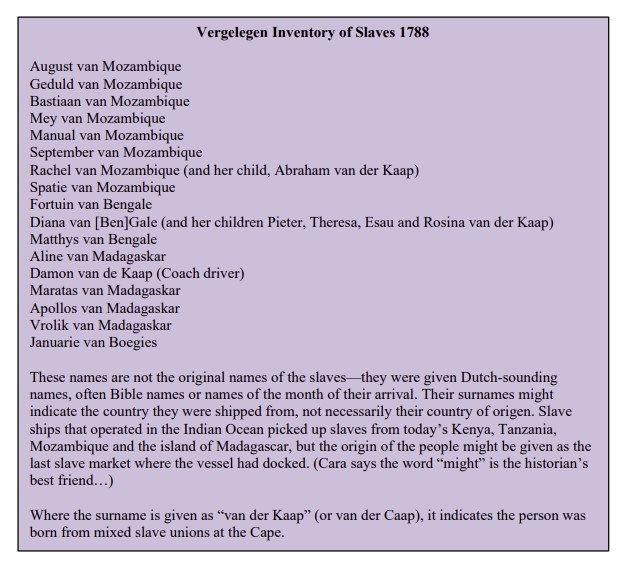
The Malans’ slaves had now increased to 25, children included. (See the records of all the slaves’ names and countries of origin in the photographs for this post.) David’s own star rose even more: on 31 July 1787 he became the adjutant of the 4th Company of the “Burgerdragonders” (civilian dragoons/mounted cavalry) of Stellenbosch. Two months later he was promoted to “kornet”. Elizabeth was pregnant with their sixth child, Jacobus, who would be born in October (and later become our 3rd great-grandfather and die in 1838 at Italeni with Piet Uys.) Even so, all was not well at home.
On the next-door estate of Harmonie, owner Jurgen Radijn had serious issues with his neighbor David Malan. Jurgen’s wife once caught David in their slave quarters in bed with Zara, one of the Radijn slaves. While such master-slave “unions” were not uncommon, it was still heavily frowned upon when found out. When Zara gave birth to a baby that was clearly fathered by a European man, the Radijns were furious, since such the child of slave and European “Christian” unions had no slave value. This baby had to be christened and educated, and soon enough set free. David became obsessed with Zara. His continuous pestering of Radijn’s slaves to send messages to Zara and general stalking behavior lead to a huge scandal in the community. On 12 September 1788 the Stellenbosch church placed David under censorship for fornication. Elizabeth banned David from their bedroom. (Can you imagine the shame she must have endured in public during those years in the Colony?) Jurgen Radijn took the baby away from Zara and sent her to live with Jan de Vos, a toll-keeper in the distant Hottentot-Hollands Mountains, to try and separate his slave from David.
Yet, on the night of 11 August, 1788, David took two horses, rode to Jan de Vos’ home and absconded with Zara. Elizabeth discovered him gone from his bedroom and apparently rode over to Jurgen’s farm in tears to report David’s disappearance with horses, a flintlock rifle and clothes. Jurgen and de Vos started a search with dogs, all in vain. Three days later David and Zara were spotted by a militiaman at Riviersonderend, and questioned. David gave his name as Jan Nortjé, and said Zara was his wife. The next day the ferryman Abraham Finnerholm helped them cross the Breërivier (in the vicinity of today’s Goudini), and two more witnesses spotted the pair going through the Hexrivierkloof (gorge). All this evidence was gathered by the dragoons following the couple’s trail, and reported back to the authorities at the Castle. David and Zara finally ended up without being caught in the Visrivier area—right on the Oosgrens of the Colony from where our Malans would trek another three and a half decades later.
Back in the Cape the Council of Justice held court, and on March 5 1789 they found David guilty in absentia of desertion as an officer of the cavalry, committing adultery, malevolent abandonment and theft of a slave. He was sentenced to demotion and loss of his military rank, banished from the Colony and if he should end up in the hands of the law, corporal punishment would be meted out. With the support her father-in-law David Malan (snr.), and two brothers-in-law Stephanus and Jacobus Malan, Elizabeth asked the court to allow David in the courtroom to defend himself, and that full control over his estate be given to her. Her first request was granted (although David did not show up), but not the second. Vergelegen was sold to Roelof Laubscher, although it eventually made its way back into Malan ownership for a while through Sara Catharina Malan’s husband…(see http://malanbond.co.za/index.php/PlaasVergelegen).
What happened to Zara is a mystery, and for a couple of years David’s whereabouts were unknown as well. Yet, despite his banishment and the severe sentence hanging over his head, David made it back to Elizabeth by 1791. Elizabeth gave birth to twin boys on 25 September 1791. The twins were christened in the Swartland Dutch congregation (Malmesbury), so maybe the Malans were back on their first farm? They did not stay in the Swartland area for too long.
On 17 October 1795 David’s name appeared with others on the declaration of the Republic of Swellendam, after the burghers ousted their Dutch East India Company (V.O.C.) magistrate, A.A. Faure. The small Republic’s independence lasted three months, as on 4 November, Swellendam accepted British rule after their forces had seized the Cape Colony from the Netherlands. We know that David refused to sign an oath of fidelity to the British government at the Cape, but have no record of when he made his next move. (The Cape briefly experienced a turnover back to Dutch forces in 1803 under the Batavian Republic, but rule was returned to Britain in 1806. The V.O.C. was officially dissolved at the end of 1795, its debts taken over by the new Dutch Batavian Republic.)
In 1811 Graaff Reinet census rolls showed Elizabeth and David’s names as living on David’s livestock farm, Buffelshoek, in the Zwagershoek district (near Cradock). Three Khoikhoi servants, plus nine male and eight female slaves were working on Buffelshoek. In addition to his slaves, David now owned 13 horses, 180 head of cattle, 2,200 sheep, 100 goats and two ox wagons. However… David Davidsz Malan seemed to not be able to live without doing something serious enough to get him banished—again. Well, at least he did not get hung, like some of his compatriots… And that is another story.
Resources:
Lampen Familie post #30
Wikipedia: History of Capetown
http://heritagesa.org/wp/a-different-history-of-franschoek-and-drakenstein/
http://malanbond.co.za/index.php/PlaasVergelegen
http://www.theheritageportal.co.za/article/vergelegen-story-part-one-splendid-beginnings-and-period-decline
https://www.walking-tours.co.za/vergelegen/ – Beautiful photos of Vergelegen farm.
https://www.google.com/search?q=erinvale+hotel+south+africa&safe=active&client=safari&rls=en&source=lnms&tbm=isch&sa=X&ved=0ahUKEwjliOnkqcnYAhVD6VMKHUePABwQ_AUICygC&biw=1255&bih=716#imgrc=VU5qusdZdY6MIM: Erinvale Estate photos.
http://www.bibleguidance.co.za/Engarticles/Waldenses.htm (Spiritual heritage of Waldensians, Prof. Johan Malan, 2007)
http://malanbond.co.za
Amsterdam tot Zeeland: Van Slawestand tot Middestand. ’n Stellenbosse slawegeskiedenis 1679 – 1834, Hans Heese
My Traitor’s Heart, Rian Malan
http://www.sahistory.org.za/article/batavian-republic-1803-1806
https://erinvale.co.za/history-of-erinvale/ Vergelegen history